

HomeBase · Lawn & Garden
A little mulch.
A healthier garden.
Help your landscape thrive from the ground up. Explore the benefits of mulch, choose a material for your space, and learn how to get the coverage just right.

Small layer. Big benefits.
Why your garden loves mulch
Keep weeds in check
Mulch blocks sunlight from reaching the soil, helping reduce weeds. Check the layer each year and replenish as needed.
Make water go further
Covering bare soil helps slow evaporation, especially during hot, dry summer weather.
Reduce erosion
A layer of mulch softens the impact of rainfall and helps keep soil from washing away.
Welcome earthworms
Organic materials such as wood and bark encourage earthworms, which support soil structure and nutrient cycling.
Bring it all together
Give beds a tidy, cohesive appearance and fill bare spaces around your plants with a layer that is easy to maintain.
Find your fit
Choose your mulch
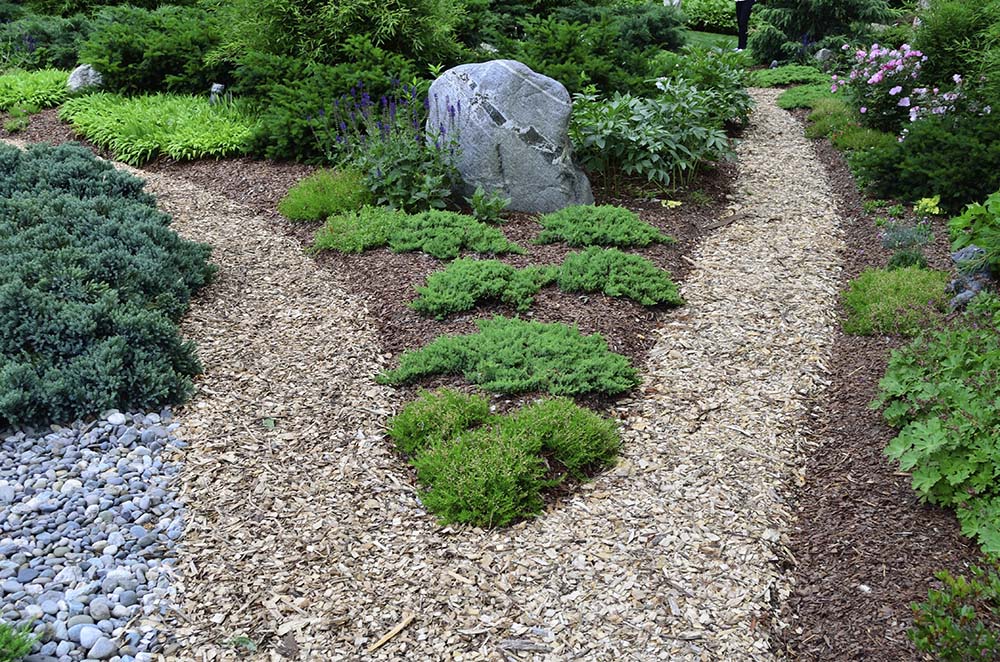
Organic mulch
Natural materials break down over time and need occasional replenishing. Common options include:
- Shredded hardwood and wood chips
- Pine bark and pine needles
- Leaves and leaf mold
- Grass clippings
- Straw
- Pecan shells
Inorganic mulch
Longer-lasting materials do not add organic matter to the soil. Options vary by project and include:
- Gravel, pebbles, and crushed stone
- Landscape cloth or woven ground cloth
- Plastic mulches, including black, clear, and reflective types
- Rubber mulch
The right place
Where to use mulch
Start with flower beds and the area around new trees and shrubs. Mulch helps retain moisture while roots establish and limits competition from grass and weeds.
For a new tree, begin with a mulched circle 3 to 4 feet across. Keep the trunk clear. Some mulch materials can also be used for paths and other landscape areas.
The right time
When to use mulch
Apply mulch after planting, then check it regularly as your landscape grows.
Refresh organic mulch as it decomposes, taking the existing depth into account. Stone and other inorganic materials generally need less frequent replacement.
Get it right from the start
How to apply mulch
Start with a clean bed
Weed the entire area before spreading mulch. Cover the bed evenly instead of piling material around individual plants.
Give stems and walls some space
Keep mulch 2 to 3 inches away from the stems of trees and shrubs, and 6 to 12 inches away from walls. Leave the base of each trunk exposed.
Spread out around trees
Begin with a circle 3 to 4 feet in diameter for a new tree. Expand the mulched area as the tree grows to cover more of its root zone.
Match the depth to the material
Avoid adding too much: thick layers can restrict air and water movement. Count any existing mulch toward your total depth.
Fine wood or bark: 2–3 inchesCoarse pine nuggets: up to 4 inchesClippings or shredded leaves: no more than 2 inches
Measure before you mulch
How much will you need?
Measure your bed’s length and width in feet, then choose your mulch depth in inches. One cubic foot covers 12 square feet at a depth of 1 inch.