

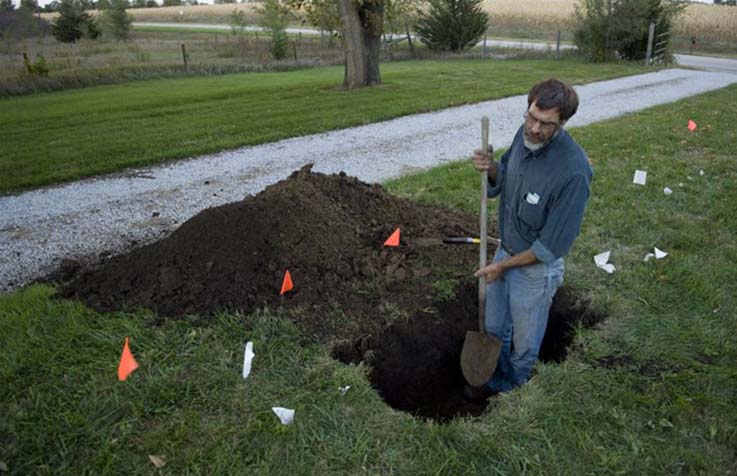
(BPT) – With the snow melted and the ground thawed, many eager homeowners and landscape professionals across the country will roll up their sleeves and reach for their garden shovels to start projects that require digging this spring.
During the transition into "digging season," the Common Ground Alliance (CGA) — the association dedicated to protecting underground utilities and the people who dig near them — reminds homeowners and professional diggers that calling 811 is the first step toward protecting you and your community from the risk of unintentionally damaging an underground line.
Every digging project, no matter how large or small, warrants a free call to 811. Installing a mailbox or fence, building a deck and landscaping are all projects that should only begin a few days after making that call.
By the numbers
People expected to dig this year without first calling 811.
A utility line is damaged in America because someone dug without calling.
Of American homeowners say they do not plan to make the free call.
Unintentionally striking one of these lines can mean outages for entire neighborhoods, harm to yourself or your neighbors, and repair costs you pay for.
How the 811 process works
- One free, simple phone call to 811 lets your local one-call center notify every appropriate utility company of your intent to dig. Call a few days ahead so there is time to mark the approximate location of utility lines with flags or paint.
- A representative from your local one-call center asks for the location and description of your digging project.
- The one-call center notifies the affected utility companies, which send professional locators to the site to mark the approximate location of your lines.
- Only once all lines have been accurately marked, roll up those sleeves and carefully dig around the marked areas.
What's under your yard
There are nearly 20 million miles of underground utility lines in the United States carrying the things your family depends on every day — electric, gas, water and sewer, cable TV, high-speed internet and landline telephone. That is more than a football field's length of utilities for every person in the country. With that much critical infrastructure underground, it is worth knowing what's below before the first shovel goes in.