

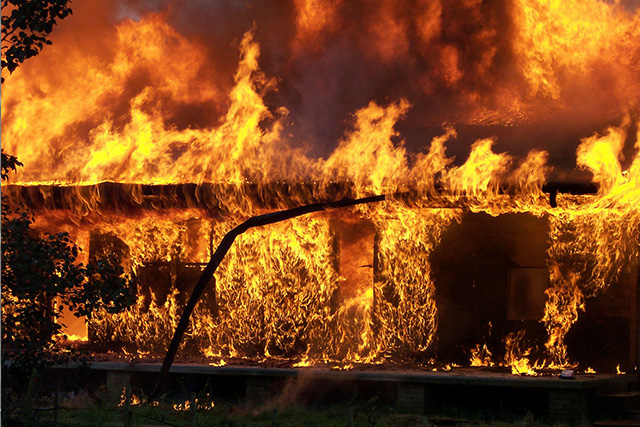
Fires can be very dangerous any time of the year but especially in the winter. Know the following facts to help protect yourself and your loved ones.
People die in winter home fires each year.
In property loss occurs from winter home fires.
Of winter fires occur in one- and two-family homes.
Cooking is the leading cause of all winter home fires.
The most common time for winter home fires.
What fire really does
Fire is fast
There is little time.In less than 30 seconds a small flame can get completely out of control and turn into a major fire. It only takes minutes for thick black smoke to fill a house, and minutes more for the house to be engulfed in flames. If you wake up to a fire, there is no time to grab valuables — only time to escape.
Fire is dark
Fire isn't bright, it's pitch black.Fire starts bright, but quickly produces black smoke and complete darkness. If you wake up to a fire you may be blinded, disoriented and unable to find your way around the home you have lived in for years.
Fire is hot
Heat is more threatening than flames.A fire's heat alone can kill. Room temperatures in a fire can be 100 degrees at floor level and rise to 600 degrees at eye level. Inhaling this super-hot air will scorch your lungs, and the heat can melt clothes to your skin. In five minutes a room can get so hot that everything in it ignites at once: this is called flashover.
Fire is deadly
Smoke and toxic gases kill more people than flames.Fire uses up the oxygen you need and produces smoke and poisonous gases that kill. Breathing even small amounts can make you drowsy, disoriented and short of breath. The odorless, colorless fumes can lull you into a deep sleep before the flames reach your door.
Smoke alarms save lives
According to a study by the National Fire Protection Association (NFPA), an estimated 890 lives could be saved each year in the United States if all homes had working smoke alarms. First Alert, one of the most recognized safety brands in America, offers an array of smoke alarms to meet almost any family's needs.
Types of smoke alarms
Smoke alarms come with a variety of features, but there are two main types, differentiated by the smoke sensing technology inside them.
Ionization
Generally more sensitive than photoelectric alarms at sensing small particles, which tend to be produced in greater amounts by hot, flaming fires that consume combustible materials rapidly and may spread quickly — paper burning in a wastebasket, or a grease fire in the kitchen.
Photoelectric
Generally more sensitive than ionization alarms at sensing large smoke particles, which tend to be produced in greater amounts by smoldering fires that may smolder for hours before bursting into flame — cigarettes burning in couches or bedding.
For maximum protection, industry experts recommend using both types of technology on each level and in every bedroom of your home. Whatever type of smoke alarm you have, First Alert® recommends replacing smoke alarms every 10 years.
Where to install alarms and extinguishers
Several smoke alarms and fire extinguishers must be installed and maintained for proper fire protection. The NFPA recommends smoke alarms on every level of the home, inside every bedroom and sleeping area, and in the main corridor outside each bedroom area. Fire extinguishers should be installed on each living level, as well as in rooms that pose potential fire hazards such as the kitchen, garage and workshop.
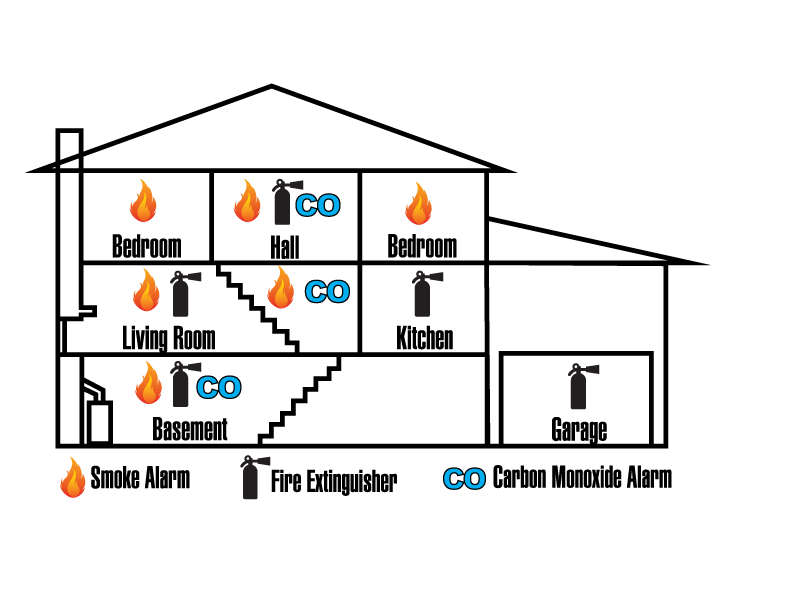
Installing and maintaining smoke alarms and fire extinguishers dramatically increases your family's chances of surviving a fire.
HomeBase carries smoke alarms, carbon monoxide alarms, fire extinguishers and replacement batteries. Stop by one of our stores to cover every level of your home.